
Yet, because of the complexity and extending implications, many businesses, especially smaller ones, struggle to craft a policy aligned with their financial reality and future goals. A typical policy sets a dollar threshold under which an asset or group of assets are not capitalized. Rather, asset purchases under the specified amount are expensed in the period they are purchased and not recorded as fixed assets. They are tangible, identifiable, and expected to generate income for over a year. The major difference is that fixed assets depreciate while current assets can’t.
Methods of depreciation
These assets ensure your employees have the tools they need to communicate, collaborate, and keep your business running smoothly. They represent a substantial investment https://www.bookstime.com/ critical for your business operations and profitability. Similarly, accounts receivable should bring an inflow of cash, so they qualify as current assets.
Depreciation Policy
- The company projects that it will use the building, machinery, and equipment for the next five years.
- The goal of these guidelines is to match the expense recognition with the income that the asset is expected to generate, providing a more accurate financial picture for the business.
- To calculate depreciation, businesses often use methods like straight-line, double-declining balance, units of production, or sum-of-the-years-digits.
- Some may be callable where the debtor can repay the full bond prior to maturity.
- It’s critical to consider what features are important to you, as each favorable term likely reduces yield.
- Businesses often use depreciation schedules to plan how assets will decrease in value.
Current assets are used to facilitate day-to-day operational expenses and investments. As a result, short-term assets are liquid, meaning they can be readily converted into cash. Asset lifecycle management is the process of planning, purchasing, using, maintaining, and disposing of tangible assets.
Components of a depreciation policy
Current asset capital investment decisions are short-term funding decisions essential to a firm’s day-to-day operations. Current assets are essential to the ongoing operation of a company to ensure it covers recurring expenses. Any tangible or physical thing a company purchases and uses for an extended period of time can be a fixed asset. A laptop or computer scheduled examples of fixed assets to be replaced annually, for example, isn’t categorized as a fixed asset because it won’t be used for more than a year. Because fixed assets are non-current assets that help your business bring in revenue over the long term, they are typically high value investments for the company. Almost all businesses have fixed assets that allow them to operate and serve customers.
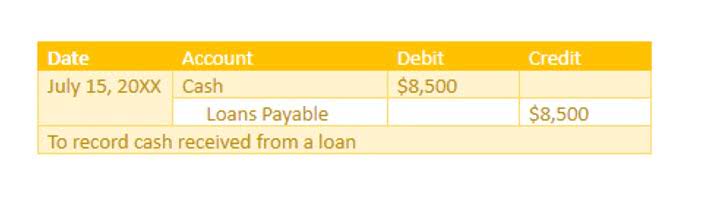
Template for creating a fixed asset policy
A fixed asset, in business terms, is a durable, tangible property or equipment that an organization possesses for the purpose of generating revenue over an extended period. When a company purchases tangible long-term assets with cash, it registers as an outflow of cash and is specifically categorized as “capital expenditures.” Except for land, which generally does not depreciate, tangible long-term assets are subject to depreciation. As fixed assets are a significant investment for many entities and an organization typically has several fixed assets, using fixed asset software is common. If an organization utilizes an ERP, it may use the fixed asset module available from the ERP instead of third-party fixed asset software. Generally, the higher the fixed asset turnover ratio, the more efficient the company is since it implies more revenue is created per dollar of fixed assets owned.
Example of Fixed Income
A depreciation policy, while often relegated to the domain of accounting, carries implications that weave through multiple layers of your business. From the investment decisions you make to the taxes you file, the right policy is a roadmap to sound financial management. The goal of these guidelines is to match the expense recognition with the income that the asset is expected to generate, providing a more accurate financial picture for the business. The assumed useful life and residual value of an asset are critical in determining its depreciation.
- For example, a company that purchases a printer for $1,000 using cash would report capital expenditures of $1,000 on its cash flow statement.
- Effective depreciation rules ensure accurate financial reporting and can influence managerial decision-making about capital investments and asset management.
- When a company purchases tangible long-term assets with cash, it registers as an outflow of cash and is specifically categorized as “capital expenditures.”
- As fixed assets are a significant investment for many entities and an organization typically has several fixed assets, using fixed asset software is common.
- Land has an indefinite asset life, and its value doesn’t change from physical deterioration.
- Fixed assets are physical or tangible assets a company owns and uses in its business operations to provide services and goods to its customers and help drive income.
- This includes buildings, machinery, vehicles, furniture, and equipment.
- These might be things that support the company’s primary operations, such as its buildings, or that generate revenue, such as machines or inventory.
- The historical cost method requires assets to be measured at the cost paid when the asset is acquired as opposed to another measure of valuation such as the fair market value.
- Typically an organization will use these three factors to establish a month depreciation expense for each asset.
- A ratio greater than one indicates a company is selling its fixed assets at a good rate.
- A higher ratio means fixed assets are being used more adequately than a lower ratio.
- Fixed assets, such as machinery, equipment, and buildings, directly contribute to a company’s ability to generate revenue.
- But it’s important to note that the definition of a fixed asset hinges on its expected lifespan rather than its price.
- The presentation of fixed assets should be the most appropriate representation of how the fixed assets are used at an organization and the nature of the organization’s business.
- Depending on what the asset is used for, this expense may be shown in cost of goods sold or in the selling, general and administrative category.
- When the one-year bond matures, the $20,000 principal will be rolled into a bond maturing one year after the original three-year holding.
- Over its useful life, the printer would gradually decapitalize itself from the balance sheet.